

Motor Overload Protection: Complete Sizing Guide with Charts & Selection Criteria
- Admin: IDAR Mohamed
- 31 Oct 2025
- 0
Motor overload protection is the most critical component in preventing costly motor failures and ensuring safe, reliable operation of electrical equipment. Motor overload relays protect against sustained overcurrent conditions that cause dangerous overheating, insulation breakdown, and premature motor failure. Whether you're installing a 3-phase motor starter with overload protection for a 3 HP, 5 HP, or 10 HP motor, proper sizing and selection directly impacts motor life expectancy and system uptime.
Incorrect overload relay sizing leads to two equally problematic scenarios: undersized protection fails to prevent motor damage, while oversized protection causes nuisance tripping that disrupts operations. This comprehensive guide provides detailed motor overload sizing charts, step-by-step selection procedures, and practical examples for properly protecting motors across all common industrial and commercial applications.
Understanding Motor Overload Protection
What is Motor Overload Protection?
Motor overload protection is a protective device that monitors motor current and disconnects power when sustained overcurrent conditions exceed safe operating limits. Unlike instantaneous short circuit protection, overload relays provide time-delayed tripping that allows for normal motor starting currents while protecting against harmful sustained overloads.
How Motor Overload Relays Work
Operating Principle:
- Current sensing: Monitors motor current through heater elements or electronic sensors
- Thermal modeling: Simulates motor heating based on current draw
- Trip calculation: Compares accumulated heat to trip threshold
- Contact operation: Opens circuit when trip point reached
- Manual reset: Requires operator intervention after trip
Types of Motor Overload Relays
| Type | Operating Principle | Typical Applications | Advantages | Limitations |
|---|---|---|---|---|
| Thermal Overload | Bimetallic strip heated by current | Small to medium motors | Simple, reliable, self-compensating | Fixed trip characteristics |
| Magnetic Overload | Electromagnetic coil operation | Large motors, precise protection | Adjustable, repeatable | Doesn't track motor temperature |
| Electronic Overload | Microprocessor-based protection | All motor sizes, advanced features | Highly accurate, multiple functions | Higher cost, requires power |
| Solid-State Overload | Current sensing with electronic trip | Modern motor control centers | Compact, programmable, diagnostic | Complex troubleshooting |
Motor Protection vs. Circuit Protection
Understanding the distinction between different protection types is essential:
Overload Protection:
- Protects against 110-150% sustained overcurrent
- Time-delayed response (10-30 seconds typical)
- Prevents motor overheating
- Sized at 115-125% of motor full load amperage (FLA)
Short Circuit Protection:
- Protects against 500-10,000% instantaneous fault current
- Immediate response (0.01-0.1 seconds)
- Prevents conductor and equipment damage
- Sized at 150-400% of motor FLA (depending on type)
Ground Fault Protection:
- Detects leakage current to ground
- Prevents shock hazards and equipment damage
- Typical settings: 5-30mA for personnel, higher for equipment
- Required by NEC in many applications
Motor Overload Sizing Charts
Standard Motor Full Load Current Values
The foundation of overload relay sizing is accurate motor full load current data:
Three-Phase Motor FLA Chart (230V/460V)
| Motor HP | FLA at 230V | FLA at 460V | Overload Range (115%) | Overload Range (125%) |
|---|---|---|---|---|
| 1/2 HP | 2.0 A | 1.0 A | 2.3 A | 2.5 A |
| 3/4 HP | 2.8 A | 1.4 A | 3.2 A | 3.5 A |
| 1 HP | 3.6 A | 1.8 A | 4.1 A | 4.5 A |
| 1.5 HP | 5.2 A | 2.6 A | 6.0 A | 6.5 A |
| 2 HP | 6.8 A | 3.4 A | 7.8 A | 8.5 A |
| 3 HP | 9.6 A | 4.8 A | 11.0 A | 12.0 A |
| 5 HP | 15.2 A | 7.6 A | 17.5 A | 19.0 A |
| 7.5 HP | 22 A | 11 A | 25.3 A | 27.5 A |
| 10 HP | 28 A | 14 A | 32.2 A | 35.0 A |
| 15 HP | 42 A | 21 A | 48.3 A | 52.5 A |
| 20 HP | 54 A | 27 A | 62.1 A | 67.5 A |
| 25 HP | 68 A | 34 A | 78.2 A | 85.0 A |
| 30 HP | 80 A | 40 A | 92.0 A | 100.0 A |
Single-Phase Motor FLA Chart (115V/230V)
| Motor HP | FLA at 115V | FLA at 230V | Overload Range (115%) | Overload Range (125%) |
|---|---|---|---|---|
| 1/6 HP | 4.4 A | 2.2 A | 5.1 A | 5.5 A |
| 1/4 HP | 5.8 A | 2.9 A | 6.7 A | 7.3 A |
| 1/3 HP | 7.2 A | 3.6 A | 8.3 A | 9.0 A |
| 1/2 HP | 9.8 A | 4.9 A | 11.3 A | 12.3 A |
| 3/4 HP | 13.8 A | 6.9 A | 15.9 A | 17.3 A |
| 1 HP | 16 A | 8 A | 18.4 A | 20.0 A |
| 1.5 HP | 20 A | 10 A | 23.0 A | 25.0 A |
| 2 HP | 24 A | 12 A | 27.6 A | 30.0 A |
| 3 HP | 34 A | 17 A | 39.1 A | 42.5 A |
| 5 HP | 56 A | 28 A | 64.4 A | 70.0 A |
⚡ Working on similar calculations?
Get practical electrical tips and quick answers like this — straight to your inbox.
Overload Relay Selection Chart
Standard thermal overload relay ranges for common motor sizes:
| Relay Size | Adjustment Range | Suitable for Motor HP | Heater Element |
|---|---|---|---|
| OL-01 | 0.16 - 0.26 A | 1/6 - 1/4 HP (230V) | H01 Series |
| OL-02 | 0.24 - 0.40 A | 1/4 - 1/3 HP (230V) | H02 Series |
| OL-03 | 0.38 - 0.63 A | 1/3 - 1/2 HP (230V) | H03 Series |
| OL-05 | 0.6 - 1.0 A | 1/2 - 3/4 HP (460V) | H05 Series |
| OL-08 | 1.0 - 1.6 A | 3/4 - 1 HP (460V) | H08 Series |
| OL-12 | 1.5 - 2.6 A | 1.5 - 2 HP (460V) | H12 Series |
| OL-20 | 2.5 - 4.0 A | 2 - 3 HP (460V) | H20 Series |
| OL-32 | 4.0 - 6.3 A | 3 - 5 HP (460V) | H32 Series |
| OL-50 | 6.3 - 10 A | 5 - 7.5 HP (460V) | H50 Series |
| OL-80 | 10 - 16 A | 7.5 - 10 HP (460V) | H80 Series |
Overload Trip Class Selection
| Trip Class | Trip Time at 600% FLA | Typical Applications |
|---|---|---|
| Class 10 | Maximum 10 seconds | Standard motors, pumps, fans, conveyors |
| Class 10A | 10-20 seconds | Hermetic compressors, some HVAC |
| Class 20 | Maximum 20 seconds | High inertia loads, centrifuges, flywheels |
| Class 30 | Maximum 30 seconds | Extremely high starting loads, crushers |
info
💡 Selection Tip: Class 10 overload relays are suitable for 90% of motor applications. Only use Class 20 or 30 when motor manufacturer specifically requires extended starting protection due to high inertia or difficult starting conditions.
Step-by-Step Overload Relay Sizing
Sizing Process Overview
Follow this systematic approach for accurate overload relay selection:
- Step 1: Obtain motor nameplate data (HP, voltage, FLA)
- Step 2: Calculate overload setting range (115-125% of FLA)
- Step 3: Select overload relay with appropriate adjustment range
- Step 4: Choose trip class based on application
- Step 5: Verify compatibility with motor starter contactor
- Step 6: Set and test overload relay
Example 1: Sizing Overload for 3 HP Motor
Motor Specifications:
- Power: 3 HP
- Voltage: 230V, 3-phase
- Full Load Current: 9.6 A (from motor nameplate)
- Service Factor: 1.15
- Application: Centrifugal pump (standard duty)
Calculation Steps:
Step 1 - Verify Motor FLA: Motor nameplate shows 9.6A at 230V three-phase ✓
Step 2 - Calculate Overload Setting Range:
Minimum setting:
Maximum setting:
Overload setting range: 11.0 - 12.0 A
Step 3 - Select Overload Relay: Choose thermal overload relay with adjustment range covering calculated values:
- Relay Model: OL-80 or equivalent
- Adjustment Range: 10-16 A ✓
- Set Point: 11.0 A (recommended for pumps)
Step 4 - Select Trip Class:
- Application: Centrifugal pump (normal starting)
- Trip Class: Class 10 (standard protection)
Step 5 - Verify Starter Compatibility:
- Contactor Size: NEMA Size 1 (suitable for 3 HP at 230V)
- Overload Relay: Compatible with Size 1 contactor ✓
Example 2: Sizing Overload for 5 HP Motor
Motor Specifications:
- Power: 5 HP
- Voltage: 460V, 3-phase
- Full Load Current: 7.6 A
- Service Factor: 1.15
- Application: Air compressor (high starting load)
Calculation Steps:
Step 1 - Motor FLA Verification: Nameplate FLA: 7.6A at 460V ✓
Step 2 - Calculate Overload Range:
Overload setting range: 8.7 - 9.5 A
Step 3 - Relay Selection:
- Relay Model: OL-50 series
- Adjustment Range: 6.3-10 A ✓
- Recommended Setting: 9.0 A
Step 4 - Trip Class Selection:
- Application: Air compressor (extended starting)
- Trip Class: Class 20 (allows longer start time)
- Reason: Compressors have high starting loads and may require 15-20 seconds to reach full speed
Step 5 - Starter Verification:
- Contactor: NEMA Size 1 (7.5 HP at 460V rating)
- Compatibility: Confirmed ✓
Example 3: Sizing Overload for 10 HP Motor
Motor Specifications:
- Power: 10 HP
- Voltage: 230V, 3-phase
- Full Load Current: 28 A
- Service Factor: 1.0 (no service factor)
- Application: Conveyor motor (frequent starts)
Calculation Steps:
Step 1 - FLA Verification: Motor nameplate: 28A at 230V ✓
Step 2 - Calculate Overload Settings:
For motors without service factor (SF = 1.0), use tighter range:
Overload setting range: 32 - 34 A
Step 3 - Select Appropriate Relay:
- Relay Type: Electronic overload relay (recommended for frequent starts)
- Model: EOL-125 or equivalent
- Range: 25-40 A ✓
- Setting: 32 A
Step 4 - Trip Class:
- Application: Conveyor (frequent start/stop cycles)
- Trip Class: Class 10
- Special Feature: Electronic relay with trip memory and diagnostic capability
Step 5 - Verify System:
- Contactor: NEMA Size 2 (10 HP at 230V)
- Overload: Electronic type compatible with Size 2 ✓
NEC Requirements for Motor Overload Protection
NEC Article 430: Motor Protection Standards
The National Electrical Code provides specific requirements for motor overload protection:
Section 430.32: Overload Protection
For motors with service factor 1.15 or greater:
- Overload device shall trip at 125% or less of motor nameplate full-load current
For motors with service factor less than 1.15:
- Overload device shall trip at 115% or less of motor nameplate full-load current
For motors with marked temperature rise:
- Motors marked with temperature rise 40°C or less: 125% FLA
- Motors with temperature rise over 40°C: 115% FLA
Section 430.6: Determining Motor Current
Preferred sources for motor current values (in order):
- Motor nameplate full-load current rating
- NEC Tables 430.247 through 430.250
- Manufacturer's data
warning
⚠️ Important: Always use the motor nameplate FLA for overload relay sizing. NEC table values are for conductor sizing and branch circuit protection, not overload relay settings.
Special Application Requirements
Automatically Started Motors (430.32(C))
Motors that restart automatically after overload tripping:
- Overload device shall not trip at more than 115% of FLA
- Prevents dangerous automatic restart under fault conditions
Intermittent Duty Motors (430.33)
Motors operating less than 5 minutes at a time:
- May use branch circuit protection only (no separate overload)
- Must be manually started
- Load must be inherently limited
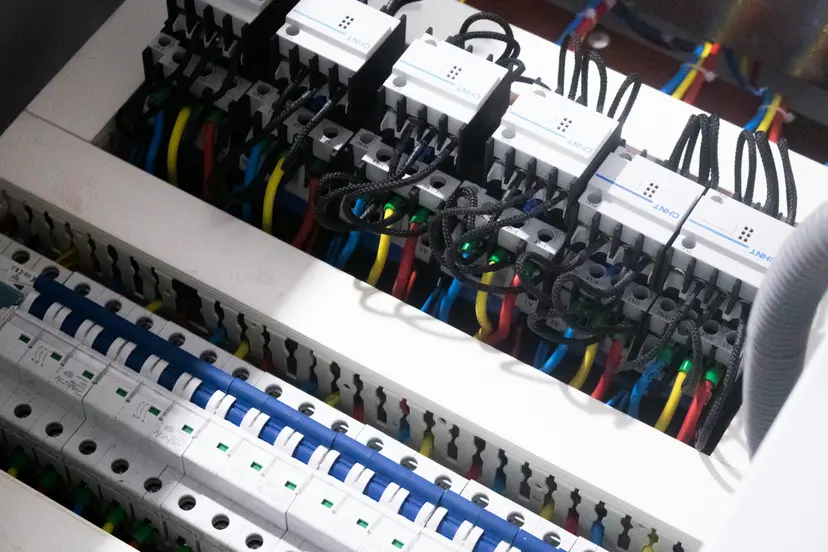
3-Phase Motor Starter with Overload Protection
Complete Starter Components
A properly specified 3-phase motor starter includes:
- Contactor: Switching device controlled by pilot circuit
- Overload Relay: Thermal or electronic protection
- Enclosure: NEMA rated for environment
- Control Circuit: Start/stop buttons, pilot lights
- Disconnect Means: Isolates starter for maintenance
Starter Sizing Table
| Motor HP | Voltage | NEMA Size | Contactor Rating | Overload Range |
|---|---|---|---|---|
| 1-1.5 HP | 230V/460V | 00 | 9A | 1.5-2.6 A (460V) |
| 2-3 HP | 230V/460V | 0 | 18A | 2.5-4.0 A (460V) |
| 5-7.5 HP | 230V/460V | 1 | 27A | 6.3-10 A (460V) |
| 10-15 HP | 230V/460V | 2 | 45A | 10-16 A (460V) |
| 20-25 HP | 230V/460V | 3 | 90A | 25-40 A (460V) |
| 30-40 HP | 230V/460V | 4 | 135A | 40-63 A (460V) |
Wiring Configuration
Three-Phase Motor Starter Wiring:
- L1, L2, L3: Incoming power (3-phase)
- T1, T2, T3: Motor connections
- Overload contacts: Series with coil circuit
- Control circuit: Typically 120V derived from L1-L2
Coordination with Circuit Protection
Proper coordination ensures selective tripping:
Protection Hierarchy:
- Overload relay trips: 115-125% sustained overcurrent (10-30 sec)
- Magnetic trip/breaker: 500-1000% overcurrent (1-5 sec)
- Instantaneous trip: >10,000% short circuit current (<0.1 sec)
Advanced Overload Protection Topics
Electronic vs. Thermal Overload Relays
Thermal Overload Advantages:
- Simple, reliable technology
- Self-powered (no auxiliary supply needed)
- Ambient temperature compensation
- Lower cost for basic applications
- Proven track record
Electronic Overload Advantages:
- Precise trip characteristics
- Adjustable trip curves
- Built-in diagnostics
- Ground fault protection options
- Communication capabilities (Modbus, Profibus)
- Trip memory and event logging
- Better accuracy (±2% vs ±10%)
Current Unbalance Protection
Phase current unbalance damages motors through:
- Negative sequence currents: Create reverse torque
- Increased heating: Temperature rise disproportionate to load
- Reduced efficiency: Power factor degradation
Electronic overload relays with unbalance protection:
- Monitor all three phases independently
- Calculate percentage unbalance
- Trip when unbalance exceeds setpoint (typically 10-20%)
Ground Fault Sensitivity
Modern electronic overload relays include ground fault detection:
Sensitivity Classes:
- Class A (High): 30mA, personnel protection
- Class B (Medium): 50-100mA, equipment protection
- Class C (Low): 1-5A, fire prevention in industrial settings
Temperature Compensation
Overload relays must account for ambient temperature:
Thermal Compensation Methods:
- Inherent: Bimetallic element naturally compensates
- Electronic: Temperature sensor adjusts trip point
- Manual: User adjusts setting for ambient conditions
Typical compensation range: 20°C to 60°C (68°F to 140°F)
Troubleshooting Motor Overload Problems
Common Overload Tripping Causes
1. Improperly Sized Overload Relay
Symptom: Trips during normal operation or won't trip during actual overload
Diagnosis:
- Measure actual motor current with clamp meter
- Compare to overload relay setting
- Check if setting matches motor nameplate FLA
Solution:
- Reset overload to proper value (115-125% FLA)
- Replace relay if adjustment range insufficient
- Verify motor nameplate matches actual motor installed
2. Mechanical Overload
Symptom: Trips consistently under load, motor current exceeds nameplate
Diagnosis:
- Check motor current under various loads
- Inspect driven equipment for binding or excessive friction
- Measure torque requirements
- Check for misalignment
Solution:
- Reduce mechanical load
- Repair or lubricate driven equipment
- Check for proper motor size for application
- Consider uprating motor if load legitimate
3. Single-Phasing Condition
Symptom: Motor hums, draws excessive current, trips on overload
Diagnosis:
- Check voltage on all three phases at motor terminals
- Verify contactor contacts closing properly
- Test for blown fuse or open conductor
Solution:
- Repair open phase (fuse, contactor contact, connection)
- Install phase loss relay for protection
- Verify proper fuse/breaker sizing
4. Voltage Problems
Symptom: Trips during starting or light load operation
Diagnosis:
- Measure supply voltage under starting conditions
- Check for voltage drop exceeding 5% during start
- Calculate voltage drop in feeder cables
Solution:
- Increase conductor size if voltage drop excessive
- Install soft starter or VFD to reduce starting current
- Correct utility voltage if supply problem
- Check connections for high resistance
5. Ambient Temperature Issues
Symptom: Trips in hot weather or near heat sources
Diagnosis:
- Measure actual ambient temperature at motor
- Check if exceeds motor rating (typically 40°C/104°F)
- Verify overload relay ambient compensation
Solution:
- Improve ventilation around motor
- Install cooling fans if necessary
- Use higher ambient-rated motor
- Relocate motor away from heat sources
Overload Relay Testing Procedures
Initial Setup Test:
1. Visual Inspection:
- Check all connections tight
- Verify proper heater elements installed
- Confirm trip class setting correct
2. Current Test:
- Start motor and measure actual current each phase
- Compare to motor nameplate FLA
- Adjust overload setting if needed
3. Trip Test:
- Temporarily increase overload setting
- Apply overload condition
- Verify relay trips in expected time
- Reset to proper setting
Periodic Maintenance:
Monthly:
- Test trip operation by pressing test button
- Verify reset mechanism functions properly
Annually:
- Verify trip calibration with current injection
- Clean contacts and check for pitting
- Test under simulated overload conditions
- Document trip times and current levels
Selection Guidelines by Application
Pumps and Fans
Characteristics:
- Generally easy starting
- Moderate to low inertia
- Steady-state operation
Overload Selection:
- Trip Class: 10
- Sizing: 115-120% FLA
- Type: Thermal or electronic
Compressors
Characteristics:
- High starting torque
- Possible liquid slugging
- Cyclic operation
Overload Selection:
- Trip Class: 20 (or 10A for hermetic)
- Sizing: 120-125% FLA
- Type: Electronic with unbalance protection preferred
Conveyors and Material Handling
Characteristics:
- Frequent starts and stops
- Variable load conditions
- Potential jam conditions
Overload Selection:
- Trip Class: 10
- Sizing: 115% FLA for better responsiveness
- Type: Electronic with trip memory
- Additional: Consider jam detection feature
HVAC Equipment
Characteristics:
- Seasonal variation in load
- Wide ambient temperature range
- Long running times
Overload Selection:
- Trip Class: 10 or 10A (hermetic compressors)
- Sizing: 125% FLA
- Type: Electronic with ambient compensation
Machine Tools
Characteristics:
- Intermittent duty
- Variable speed (often VFD controlled)
- Precision requirements
Overload Selection:
- Trip Class: 10
- Sizing: 115% FLA
- Type: Electronic with VFD compatibility
- Additional: Integrated motor protection if using VFD
Cost-Benefit Analysis
Thermal vs. Electronic Overload Comparison
| Factor | Thermal Overload | Electronic Overload |
|---|---|---|
| Initial Cost | $50-150 | $150-500 |
| Accuracy | ±10% | ±2% |
| Features | Basic protection only | Advanced diagnostics, communication |
| Maintenance | Replace heater elements | Minimal, software updates |
| Lifespan | 10-15 years | 15-20 years |
| Energy Savings | None | Optimized settings reduce downtime |
| ROI Period | N/A | 2-4 years in critical applications |
When to Upgrade to Electronic Protection
Consider electronic overload relays for:
-
Motors larger than 25 HP
-
Critical process equipment
-
Frequent nuisance tripping issues
-
Systems requiring remote monitoring
-
Applications with variable loads
-
Installations requiring detailed diagnostics
Conclusion: Ensuring Proper Motor Protection
Proper motor overload relay sizing and selection is fundamental to motor longevity, operational reliability, and electrical safety. By following the systematic approach outlined in this guide—accurately determining motor FLA, applying correct sizing factors, selecting appropriate trip classes, and verifying installation—you ensure motors receive optimal protection throughout their service life.
Key Takeaways:
- Always size overload relays to motor nameplate FLA (not NEC table values)
- Apply 115-125% sizing factor based on motor service factor
- Use Class 10 for 90% of applications; Class 20/30 only when specified
- Verify overload relay adjustment range covers calculated setting
- Consider electronic overload relays for critical or large motors
- Test and document overload settings during commissioning
- Maintain regular testing schedule to ensure continued protection
Whether sizing overload protection for a 3 HP pump motor, 5 HP compressor, or 10 HP conveyor, these principles ensure reliable operation and prevent costly motor failures. For complex applications or motors exceeding 50 HP, consult with motor protection specialists to optimize protection schemes.
Ready to implement comprehensive motor protection? Explore our related guides on motor control basics, three-phase power calculations, and VFD applications.
🔗 Related Posts
- PWM Motor Control: Complete Guide to DC Motor Speed Control
- Understanding Induction Motors: Working Principle, Calculations, and Applications
- Variable Frequency Drive (VFD): Complete Guide to Working Principles
- 3-Phase Power Calculation: Complete Guide with kW to Amps Formulas
- Contactor vs Relay: Complete Guide with Applications
Helpful Calculators
Credits
- Photo by Griffin Wooldridge on Unsplash
⭐ Was this article helpful?
IDAR Mohamed
Electrical Engineer
Electrical Engineer specialized in power systems, electrical installations, and energy efficiency. Passionate about simplifying complex electrical concepts into practical guides. (University of applied sciences graduate, with experience in HV/LV systems and industrial installations.)
- Motor Control
- Motor Protection
- Overload Relay
- Motor Starter
- Three-Phase Motors