Power Distribution Panel: Complete Guide to Electrical Distribution Boards & Consumer Units
- Admin: IDAR Mohamed
- 10 Oct 2025
- 0
Understanding power distribution panels is essential for anyone involved in electrical system design, installation, or maintenance. Whether you're upgrading your home's electrical service, designing a commercial facility, or managing an industrial power system, selecting and sizing the right electrical distribution panel ensures safe, reliable, and efficient power distribution throughout your building.
From residential 100-amp panels to massive 600 amp main distribution panels in commercial facilities, this comprehensive guide will help you understand distribution board types, sizing calculations, and installation requirements to make informed decisions about your electrical infrastructure.
Understanding Power Distribution Panels
What is a Power Distribution Panel?
A power distribution panel (also called an electrical distribution panel, distribution board, or consumer unit in UK/European markets) is the central hub of any electrical system. It receives incoming electrical power from the utility or main service and distributes it safely to various circuits throughout a building through protective devices like circuit breakers or fuses.
Primary Functions:
- Power Distribution: Routes electricity from service entrance to individual circuits
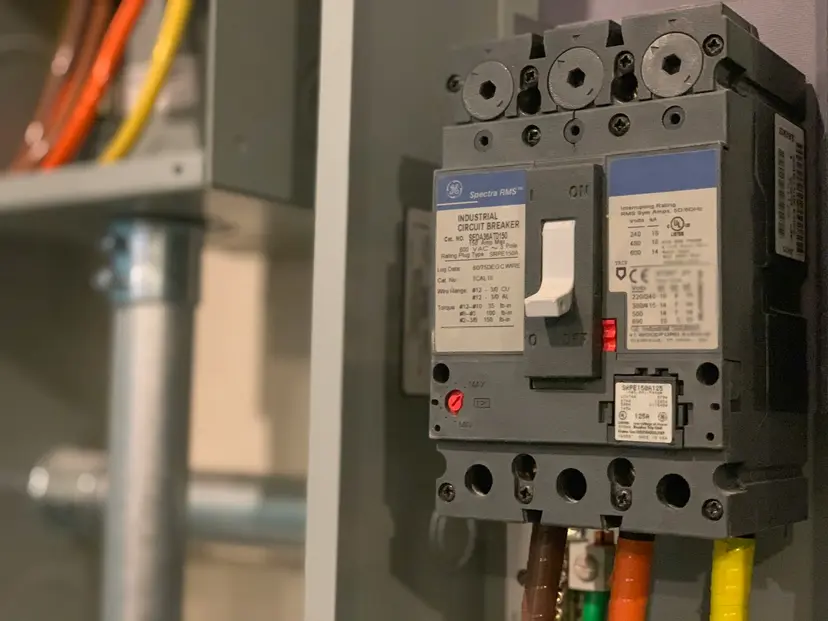
- Circuit Protection: Houses circuit breakers that protect against overloads and short circuits
- Load Management: Organizes and balances electrical loads across phases
- Safety Control: Provides centralized disconnect capability for maintenance and emergencies
- Metering Integration: Often includes or connects to electrical metering equipment
Distribution Panel vs Consumer Unit
These terms are often used interchangeably, but there are regional preferences:
| Term | Region | Common Usage | Technical Difference |
|---|---|---|---|
| Distribution Panel | North America | Commercial/Industrial | Larger, modular systems |
| Consumer Unit | UK/Europe | Residential | Compact, integrated design |
| Distribution Board | Universal | All applications | General technical term |
| Load Center | North America | Residential | Small residential panels |
Key Point: While terminology varies by region, all serve the same fundamental purpose of safely distributing electrical power and protecting circuits.
Types of Power Distribution Panels
Main Distribution Panel (MDP)
The main distribution panel is the first point of power distribution from the utility service entrance.
Characteristics:
- Includes a main service disconnect breaker
- Receives power directly from the utility transformer
- Typical residential ratings: 100A, 150A, 200A, 400A
- Common commercial and industrial ratings: 400A, 600A, 800A, 1200A+
- Must comply with NEC Article 408 (or local equivalent standards)
Common Applications:
- Single-family homes (100–200A)
- Multi-family buildings (400–800A)
- Commercial facilities (600A+)
- Industrial plants (1200A+)
Sub-Distribution Panel (Subpanel)
A sub-distribution panel is fed from the main panel and distributes power to specific building areas or equipment groups.
Characteristics:
- Fed through breaker in main panel
- No main disconnect breaker required (NEC allows but not required)
- Separate grounding and neutral buses
- Sizes typically 60A-200A
When to Use Subpanels:
- Home additions or renovations
- Detached garages or workshops
- Specific equipment clusters
- Long distance from main panel
- To organize circuits by function or location
3 Phase Consumer Unit
A 3 phase consumer unit (or three-phase distribution board) is designed specifically for three-phase electrical systems common in commercial and industrial applications.
Key Features:
- Three separate phase bus bars (L1, L2, L3)
- Balanced load distribution capability
- Higher power capacity than single-phase
- Support for both three-phase and single-phase loads
Voltage Configurations:
- 208V/120V (North America commercial)
- 480V/277V (North America industrial)
- 400V/230V (European standard)
- 415V/240V (UK/Australia standard)
Applications Requiring 3-Phase:
- Industrial motors and machinery
- Large commercial HVAC systems
- Data centers and server rooms
- Manufacturing facilities
- Large commercial kitchens
- Electric vehicle charging stations (multiple)
Distribution Panel Components
Essential Panel Elements
Understanding the components inside an electrical distribution panel helps with maintenance, troubleshooting, and upgrade planning.
| Component | Function | Importance |
|---|---|---|
| Main Breaker | Disconnects entire panel | Primary safety disconnect |
| Bus Bars | Conducts electricity to breakers | Current distribution backbone |
| Circuit Breakers | Protects individual circuits | Overcurrent protection |
| Neutral Bus | Common connection for neutral wires | Completes electrical path |
| Ground Bus | Equipment grounding connection | Safety grounding system |
| Panel Enclosure | Houses all components | Physical protection, safety |
Bus Bar Configurations
Single-Phase Panel (120/240V)
- Two hot buses: L1 and L2 at 120V each
- Neutral bus: Common return path
- Ground bus: Equipment grounding
- 240V loads: Connect to both hot buses
- 120V loads: Connect to one hot bus and neutral
3-Phase Panel (208V/120V or 480V/277V)
- Three hot buses: L1, L2, and L3
- Neutral bus: For single-phase loads
- Ground bus: Equipment grounding
- 3-phase loads: Connect to all three phases
- Single-phase loads: Connect between any phase and neutral
Distribution Panel Sizing Guide
Load Calculation Fundamentals
Proper panel sizing begins with accurate load calculations following NEC Article 220.
Step 1: Calculate Total Connected Load
General Lighting and Receptacles:
Small Appliance Circuits:
- Minimum 2 circuits at 1500 VA each = 3000 VA
- Kitchen countertop outlets
Laundry Circuit:
- Minimum 1 circuit at 1500 VA
Large Appliances (Nameplate Ratings):
- Electric range: 8000-12,000 VA
- Electric dryer: 5000-6000 VA
- Water heater: 3500-5500 VA
- HVAC equipment: Per nameplate
Step 2: Apply Demand Factors
NEC allows demand factors for certain loads since not all loads operate simultaneously:
| Load Type | Demand Factor |
|---|---|
| General lighting first 3000 VA | 100% |
| General lighting over 3000 VA | 35% |
| Electric range 12 kW or less | 8000 VA |
| Electric dryer | 100% (5000 VA min) |
| Water heater | 100% |
| HVAC (largest) | 100% |
Step 3: Calculate Service/Panel Size
Example Calculation - Residential Home:
Given:
- 2400 sq ft home
- Standard appliances
- Central AC: 24A at 240V
- Electric range: 12 kW
- Electric dryer: 5.5 kW
- Water heater: 4.5 kW
Calculations:
Lighting Load:
Small Appliance & Laundry:
General Lighting with Demand Factor:
- First 3000 VA: 3000 VA × 100% = 3000 VA
- Remaining: (7200 + 4500 - 3000) × 35% = 3045 VA
- Subtotal: 6045 VA
Large Appliances:
- Electric range: 8000 VA (demand factor applied)
- Dryer: 5500 VA × 100% = 5500 VA
- Water heater: 4500 VA × 100% = 4500 VA
- Central AC: 24A × 240V = 5760 VA
Total Load:
Required Service Size:
Add 25% for Future Expansion:
Panel Selection: 200 Amp Main Distribution Panel (next standard size)
Standard Panel Sizes and Applications
| Panel Size | Voltage | Typical Application | Number of Circuits |
|---|---|---|---|
| 100 Amp | 120/240V | Small homes, older construction | 20-30 spaces |
| 150 Amp | 120/240V | Medium homes, limited electric appliances | 30-40 spaces |
| 200 Amp | 120/240V | Modern homes, standard loads | 40-60 spaces |
| 400 Amp | 120/240V or 208V | Large homes, multi-family buildings | 60+ spaces |
| 600 Amp | 208V or 480V | Commercial buildings, light industrial | 84+ spaces |
| 800 Amp | 208V or 480V | Large commercial, industrial facilities | 100+ spaces |
600 Amp Main Distribution Panel Applications
A 600 amp main distribution panel is a heavy-duty power distribution solution for facilities with substantial electrical demands.
Typical Applications:
- Large Commercial Buildings: Office complexes, shopping centers
- Industrial Facilities: Light manufacturing, warehouse operations
- Multi-Unit Residential: Apartment buildings (20+ units)
- Data Centers: Server farms with high density computing
- Hospitals and Healthcare: Medical facilities with critical loads
- Educational Facilities: Schools, universities with labs
Installation Considerations:
- Requires 600 kcmil to 1250 kcmil service entrance conductors
- Three-phase service typical (208V or 480V)
- Multiple subpanel feeders
- May require current transformer metering
- Professional engineering design required
- Utility coordination for service connection
Distribution Panel Selection Criteria
Factor 1: Load Requirements
Calculate Your Actual Needs:
- Sum all connected loads
- Apply appropriate demand factors
- Add 20-25% for growth
- Select next standard size up
Factor 2: Number of Circuits Needed
Consider current and future circuit requirements:
- Count existing circuits
- Add planned additions (10-15 years)
- Include spare spaces (20% minimum)
- Consider dedicated circuits for:
- Kitchen appliances
- Bathroom outlets
- Laundry equipment
- HVAC systems
- Electric vehicle charging
Factor 3: Phase Configuration
Single-Phase (120/240V):
- Most residential applications
- Light commercial use
- Loads up to 200A typical
- Simple wiring and installation
Three-Phase (208V/120V or 480V/277V):
- Commercial and industrial
- Motors over 3 HP
- Large HVAC systems
- Balanced load distribution
- Higher power efficiency
Factor 4: Panel Type and Features
Standard Features:
- Main breaker disconnect
- Branch circuit breakers
- Neutral and ground buses
- NEMA 1 enclosure (indoor)
Optional Features:
- GFCI/AFCI breakers
- Surge protection
- Remote monitoring capability
- Outdoor-rated enclosures (NEMA 3R)
- Generator interlock kits
- Smart home integration
Installation Requirements and Codes
NEC Code Requirements
Article 408: Switchboards and Panelboards
Working Space Requirements (NEC 110.26):
- Depth: Minimum 3 feet in front of panel
- Width: 30 inches or width of panel (whichever is greater)
- Height: 6.5 feet minimum working space
- No Storage: Working space must remain clear
Panel Height Requirements:
- Maximum height to center of grip: 6 feet 7 inches
- Minimum height above floor: 4 feet to top breaker
- ADA accessible where required
Grounding and Bonding (NEC Article 250)
Main Panel:
- Neutral and ground bonded together
- Main bonding jumper installed
- Grounding electrode system connected
Subpanel:
- Neutral and ground kept separate
- Four-wire feeder from main panel
- Equipment ground only to panel enclosure
Professional Installation Requirements
When Licensed Electrician Required:
- All service entrance work
- Main panel installation or replacement
- Panel upgrades requiring utility connection
- Three-phase distribution systems
- Any work requiring permits
Permit Requirements:
- Service upgrades (amperage increase)
- New panel installations
- Subpanel additions in many jurisdictions
- Panel relocations
Distribution Panel Maintenance
Routine Inspection Schedule
Monthly Checks
- Test GFCI/AFCI breakers (test button)
- Listen for unusual sounds (buzzing, crackling)
- Check for burning odors
- Verify panel door closes securely
Annual Professional Inspection
- Infrared thermography scan
- Tighten bus bar and lug connections
- Clean dust and debris
- Check breaker operation
- Verify proper labeling
- Inspect for signs of overheating
Warning Signs Requiring Immediate Attention
Call an Electrician If You Notice:
- Burning smell from panel
- Hot panel enclosure or breakers
- Breakers frequently tripping
- Buzzing or crackling sounds
- Visible corrosion on connections
- Flickering lights throughout building
- Discolored breakers or wires
- Loose or damaged panel components
Panel Lifespan and Replacement
Typical Service Life:
- Modern panels: 25-40 years
- Older Federal Pacific or Zinsco: Replace immediately (safety hazard)
- Fuse boxes: Consider upgrading to breakers
Upgrade Indicators:
- Insufficient circuit capacity
- Adding major appliances (EV charger, pool)
- Home addition or renovation
- Federal Pacific or Zinsco panels
- Aluminum wiring connections
- Obsolete or discontinued breakers
Upgrading Your Distribution Panel
Common Upgrade Scenarios
Scenario 1: 100A to 200A Service Upgrade
What's Involved:
- New 200A main panel installation
- Service entrance conductor replacement
- Utility meter base upgrade
- Main breaker upgrade
- Permit and inspection
- Estimated Typical Cost: $2,000-$4,000 (residential)
Scenario 2: Adding Subpanel
What's Involved:
- Feeder circuit from main panel
- Proper wire sizing for distance
- Subpanel installation
- Separate neutral and ground buses
- Circuit organization
- Estimated Typical Cost: Around $500-$1,500 (not including extended wiring runs or complex installations)
Scenario 3: Single-Phase to 3-Phase Conversion
What's Involved:
- Utility service upgrade coordination
- New 3 phase consumer unit installation
- Service entrance upgrades
- Load balancing across phases
- Equipment compatibility verification
- Estimated Typical Cost: Around $5,000-$15,000+ (varies significantly by property and utility requirements)
Cost Factors
| Factor | Impact on Cost |
|---|---|
| Panel size/amperage | Higher amps = higher cost |
| Service entrance upgrade | Major cost component |
| Utility coordination | May include utility fees |
| Permit and inspection | $100-$500 typically |
| Location accessibility | Difficult access increases cost |
| Existing panel removal | Disposal and labor costs |
Distribution Panel Safety
Electrical Safety Practices
Before Working Near Panel:
- Never open panel unless you're qualified
- Assume all wires are live even with main breaker off
- Keep working space clear at all times
- Post proper labeling on all circuits
- Use proper PPE if qualified to work
Emergency Procedures:
- Know main breaker location
- Keep flashlight near panel
- Post emergency numbers
- Train household members
- Test monthly for awareness
Circuit Labeling Best Practices
Proper Circuit Identification:
- Label each breaker clearly
- Include room and outlets/fixtures served
- Use waterproof labels
- Update after any changes
- Create circuit map document
Example Labels:
- "Kitchen Countertop Outlets - North Wall"
- "Master Bedroom - All Outlets & Lights"
- "Central AC Compressor - Outdoor Unit"
- "Electric Range - Kitchen"
Advanced Distribution Systems
Smart Distribution Panels
Modern technology is transforming electrical distribution:
Smart Panel Features:
- Real-time monitoring: Track energy usage by circuit
- Remote control: Turn circuits on/off via smartphone
- Load management: Automatically balance loads
- Integration: Works with home automation systems
- Predictive maintenance: Alerts for potential issues
Popular Smart Panel Systems:
- Span Panel
- Schneider Electric Square D with Wiser
- Eaton Smart Breakers
- Siemens Smart Panels
Generator Integration
Transfer Switch Options:
Manual Transfer Switch:
- Manual switching between utility and generator
- Lower cost option
- Requires user intervention
- Common for portable generators
Automatic Transfer Switch (ATS):
- Automatic switching when power fails
- Seamless transition
- Works with standby generators
- Higher cost but convenient
Generator Interlock Kit:
- Mechanical device on panel
- Prevents simultaneous utility/generator connection
- Lower cost than transfer switch
- Requires manual generator start
Distribution Panel Comparison Table
Residential Panel Comparison
| Panel Type | Amperage | Best For | Circuit Capacity | Estimated Typical Cost |
|---|---|---|---|---|
| Basic Load Center | 100A | Small homes or light electrical demand | 20–30 circuits | Around $150–$300 |
| Standard Main Panel | 200A | Modern homes with standard appliances | 40–60 circuits | Approximately $300–$600 |
| Main Lug Panel | 100–200A | Subpanel applications, no main breaker | 20–40 circuits | Typically $200–$400 |
| Three-Phase Panel | 200–400A | Larger homes, workshops, or heavy equipment | 40–60 circuits | Usually $800–$2,000+ |
Commercial Panel Comparison
| Panel Type | Amperage | Best For | Voltage | Estimated Typical Cost |
|---|---|---|---|---|
| Commercial Panel | 400A | Small commercial buildings or light industrial loads | 208V / 120V | Around $1,500–$3,000 |
| Distribution Board | 600A | Medium-sized commercial facilities | 208V or 480V | Approximately $3,000–$6,000 |
| Switchboard | 800–1200A | Large commercial or industrial applications | 480V | Typically $8,000–$15,000+ |
Troubleshooting Common Panel Issues
Problem: Breaker Keeps Tripping
Possible Causes:
- Overloaded circuit: Too many devices on one circuit
- Short circuit: Damaged wire or appliance fault
- Ground fault: Current leaking to ground
- Defective breaker: Breaker itself is faulty
Solutions:
- Redistribute loads across circuits
- Unplug devices and test systematically
- Inspect for damaged cords or outlets
- Replace defective breaker
Problem: Warm or Hot Panel
Possible Causes:
- Loose connections creating resistance
- Overloaded circuits
- Undersized panel for load
- Failing breaker or bus bar
Action Required:
- Immediate: Reduce load on circuits
- Urgent: Call licensed electrician
- Do not: Ignore this warning sign
- Risk: Potential fire hazard
Problem: Insufficient Circuit Capacity
Solutions:
- Add subpanel: Expand circuit capacity
- Upgrade main panel: Increase amperage
- Redistribute loads: Balance existing circuits
- Remove unused circuits: Free up spaces
Conclusion: Selecting the Right Distribution Panel
Choosing and sizing the right power distribution panel is critical for electrical safety, system reliability, and future expandability. Whether you need a simple residential distribution board, a sophisticated 3 phase consumer unit for industrial equipment, or a robust 600 amp main distribution panel for a commercial facility, understanding load calculations, code requirements, and panel features ensures you make the right choice.
Key Takeaways:
- Calculate loads accurately using NEC methods and demand factors
- Size for future growth by adding 20-25% spare capacity
- Choose appropriate phase configuration (single or three-phase) based on loads
- Consider circuit quantity including future expansion needs
- Always use licensed professionals for service entrance and main panel work
- Maintain proper documentation including circuit labels and load schedules
Whether you're upgrading from an outdated 100-amp panel to a modern 200-amp service, installing a subpanel for a home addition, or designing a complete electrical distribution system for a new commercial building, following proper sizing procedures and code requirements ensures a safe, reliable electrical system that serves your needs today and adapts to future demands.
For more detailed information on related electrical topics, explore our guides on circuit breaker sizing, wire sizing calculations, and voltage drop considerations.
🔗 Related Posts
- Circuit Breaker Sizing: Complete Guide with Wire Size Charts & NEC Code Requirements
- Wire Size Calculator: Complete Guide with Single Phase, 3-Phase & DC Calculations
- Complete Guide to Voltage Drop: Calculations, Tables & Calculators
- Difference Between Grounding and Earthing: Complete Guide with Wiring Examples & NEC Code Requirements
Helpful Calculators
- Voltage Drop Calculator
- Ohm's Law Calculator
- Power Factor Calculator
- Capacitor and Inductor Reactance Calculator
Credits
- Photo by Dean Brierley on Unsplash
⭐ Was this article helpful?
IDAR Mohamed
Electrical Engineer
Electrical Engineer specialized in power systems, electrical installations, and energy efficiency. Passionate about simplifying complex electrical concepts into practical guides. (University of applied sciences graduate, with experience in HV/LV systems and industrial installations.)
- Power Distribution Panel
- Electrical Distribution Panel
- Distribution Board
- 3 Phase Consumer Unit