

Circuit Breaker Sizing: Complete Guide with Wire Size Charts & NEC Code Requirements
- Admin: IDAR Mohamed
- 19 Sep 2025
- 0
Circuit breaker sizing is one of the most critical aspects of electrical system design and installation. Proper breaker sizing protects your electrical circuits from dangerous overcurrents while ensuring your electrical loads receive adequate power to function correctly. Whether you're installing a new 30 amp breaker for an electric dryer or sizing a 40 amp breaker for an electric range, understanding the relationship between circuit breakers, wire sizes, and load requirements is essential for safe electrical work.
Getting circuit breaker sizing wrong can lead to nuisance tripping, electrical fires, or equipment damage. This comprehensive guide will teach you how to properly size circuit breakers, select appropriate wire sizes, and comply with National Electrical Code (NEC) requirements for residential and commercial installations.
Table of Contents
- Understanding Circuit Breaker Fundamentals
- Circuit Breaker Sizing Calculations
- Wire Size Requirements for Common Breaker Sizes
- NEC Code Requirements and Safety Standards
- Step-by-Step Breaker Sizing Process
- Common Circuit Breaker Applications
- Troubleshooting and Safety Considerations
Understanding Circuit Breaker Fundamentals
What is a Circuit Breaker?
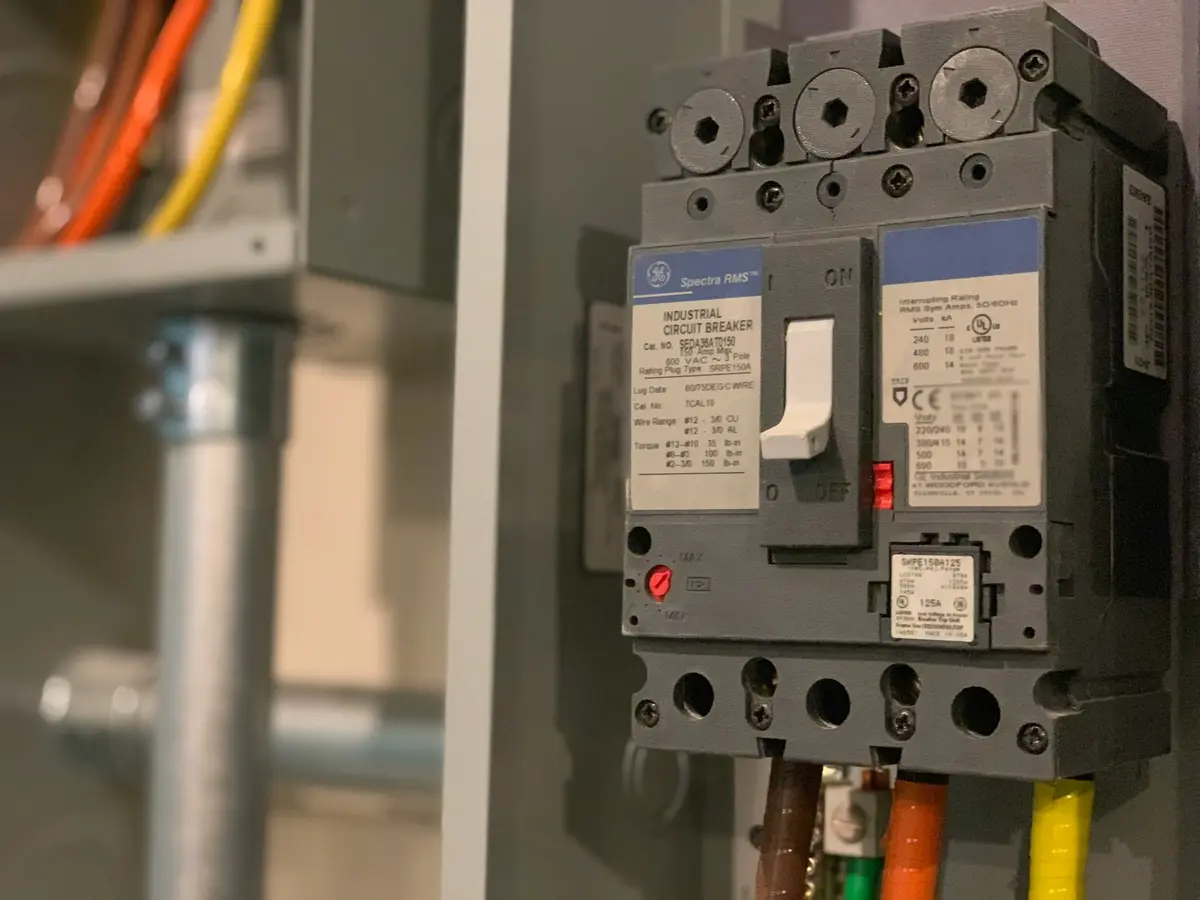
A circuit breaker is an automatically operated electrical switch designed to protect electrical circuits from damage caused by excess current from an overload or short circuit. Unlike fuses that must be replaced after they operate, circuit breakers can be reset to resume normal operation.
Key Circuit Breaker Functions
Primary Protection Functions:
- Overcurrent Protection: Prevents excessive current flow that could damage wires and equipment
- Short Circuit Protection: Quickly interrupts dangerous fault currents
- Arc Fault Protection: Modern AFCI breakers detect dangerous electrical arcs
- Ground Fault Protection: GFCI breakers protect against ground faults in wet locations
Circuit Breaker Rating vs. Wire Ampacity
Understanding the relationship between breaker ratings and wire ampacity is crucial:
| Concept | Definition | Purpose |
|---|---|---|
| Breaker Rating | Maximum current the breaker allows before tripping | Protects the circuit from overcurrent |
| Wire Ampacity | Maximum current a wire can safely carry continuously | Prevents wire overheating and fires |
| Load Current | Actual current drawn by connected equipment | Determines minimum circuit capacity needed |
Critical Rule: The circuit breaker rating must never exceed the wire's ampacity rating.
Circuit Breaker Sizing Calculations
Basic Sizing Formula
The fundamental formula for circuit breaker sizing:
Where:
- Load Current = Total current drawn by all connected loads
- Safety Factor = Typically 1.25 (125%) for continuous loads
Continuous vs. Non-Continuous Loads
Continuous Loads (operate for 3 hours or more):
- Air conditioning units
- Lighting circuits in commercial buildings
- Electric heaters
- Sizing: Load current × 1.25
Non-Continuous Loads (operate less than 3 hours):
- Most residential appliances
- Temporary equipment
- Sizing: Load current × 1.0
Load Calculation Example
Let's calculate the proper breaker size for a kitchen circuit:
Given Loads:
- Microwave: 12 amps
- Toaster: 8 amps
- Coffee maker: 6 amps
- Total load: 26 amps (non-continuous)
Calculation: Required breaker capacity = 26 amps × 1.0 = 26 amps
Standard Breaker Selection: Next standard size up = 30 amp breaker
Derating Factors
Several factors can reduce wire ampacity, affecting breaker sizing:
Temperature Derating
High ambient temperatures reduce wire current-carrying capacity:
| Ambient Temperature | Copper Wire Derating Factor |
|---|---|
| 86°F - 95°F (30°C - 35°C) | 0.91 |
| 96°F - 104°F (36°C - 40°C) | 0.82 |
| 105°F - 113°F (41°C - 45°C) | 0.71 |
| 114°F - 122°F (46°C - 50°C) | 0.58 |
Conduit Fill Derating
More than three current-carrying conductors in a raceway require derating:
| Number of Conductors | Derating Factor |
|---|---|
| 4-6 conductors | 0.80 |
| 7-9 conductors | 0.70 |
| 10-20 conductors | 0.50 |
| 21-30 conductors | 0.45 |
Wire Size Requirements for Common Breaker Sizes
⚡ Working on similar calculations?
Get practical electrical tips and quick answers like this — straight to your inbox.
Standard Wire Size Chart for Circuit Breakers
The following chart shows proper wire sizes for common circuit breaker ratings:
| Breaker Size | Copper Wire (AWG) | Aluminum Wire (AWG) | Common Applications |
|---|---|---|---|
| 15 Amp | 14 AWG | 12 AWG | General lighting, outlets |
| 20 Amp | 12 AWG | 10 AWG | Kitchen outlets, bathroom outlets |
| 25 Amp | 10 AWG | 8 AWG | Small air conditioners |
| 30 Amp | 10 AWG | 8 AWG | Electric dryers, RV outlets |
| 40 Amp | 8 AWG | 6 AWG | Electric ranges, large air conditioners |
| 50 Amp | 6 AWG | 4 AWG | Electric ranges, hot tubs |
| 60 Amp | 6 AWG | 4 AWG | Large appliances, sub-panels |
| 70 Amp | 4 AWG | 2 AWG | Sub-panels, large motors |
| 80 Amp | 4 AWG | 2 AWG | Sub-panels, commercial equipment |
| 100 Amp | 3 AWG | 1 AWG | Main panels, large sub-panels |
30 Amp Breaker Wire Size Requirements
For a 30 amp breaker, the wire sizing requirements are:
Copper Conductors:
- Wire Size: 10 AWG minimum
- Ampacity: 30 amps at 90°C rating
- Insulation: THWN-2, XHHW-2, or equivalent
Aluminum Conductors:
- Wire Size: 8 AWG minimum
- Ampacity: 30 amps at 90°C rating
- Insulation: THWN-2, XHHW-2, or equivalent
Important Considerations for 30 Amp Circuits:
- Commonly used for electric dryers (requires 10-3 cable with ground)
- RV electrical pedestals (30 amp service)
- Small air conditioning units
- Electric water heaters
Wire Size for 40 Amp Breaker
For a 40 amp breaker, proper wire sizing is critical:
Copper Conductors:
- Wire Size: 8 AWG minimum
- Ampacity: 40 amps at 90°C rating
- Never use: 10 AWG or smaller wire
Aluminum Conductors:
- Wire Size: 6 AWG minimum
- Ampacity: 40 amps at 90°C rating
- Never use: 8 AWG or smaller wire
Common 40 Amp Applications:
- Electric ranges and cooktops
- Large electric water heaters
- EV charging stations (Level 2)
- Central air conditioning units
warning
⚠️ Safety Warning: Using undersized wire for any breaker size creates a serious fire hazard. The wire will overheat before the breaker trips, potentially causing electrical fires. Always verify wire ampacity ratings and apply appropriate derating factors.
NEC Code Requirements and Safety Standards
NEC Article 240: Overcurrent Protection
The National Electrical Code provides specific requirements for circuit breaker sizing and installation:
Section 240.4: Protection of Conductors
- Conductors shall be protected against overcurrent
- The protection device rating shall not exceed conductor ampacity
- Standard overcurrent device ratings are specified in 240.6
Section 240.6: Standard Ampere Ratings
Standard circuit breaker ratings available: 15, 20, 25, 30, 35, 40, 45, 50, 60, 70, 80, 90, 100, 110, 125, 150, 175, 200 amperes
Special NEC Requirements
Kitchen Small Appliance Circuits (210.11(C)(1))
- Minimum two 20-amp circuits required
- Must serve countertop outlets
- Cannot serve other loads
Bathroom Circuits (210.11(C)(3))
- Minimum one 20-amp circuit required
- Can serve multiple bathrooms if only bathroom loads
GFCI Protection Requirements (210.8)
GFCI protection required for:
- Bathrooms (all outlets)
- Kitchen countertop outlets
- Outdoor outlets
- Basement and garage outlets
- Crawl spaces and unfinished basements
Step-by-Step Breaker Sizing Process
Step 1: Calculate Total Load Current
For Individual Appliances: Check the appliance nameplate for:
- Rated current (in amperes)
- Power rating (in watts or VA)
- Voltage rating (120V, 240V, etc.)
If only power is given, calculate current:
Example: 4800W electric range at 240V
Step 2: Apply Continuous Load Factor
For Continuous Loads: Multiply load current by 1.25 (125%)
For Non-Continuous Loads: Use actual load current
Example: 20-amp continuous load Required capacity = 20A × 1.25 = 25A
Step 3: Apply Derating Factors
Consider environmental conditions:
- Temperature: Apply temperature derating if ambient exceeds 86°F
- Conduit fill: Apply derating for more than 3 current-carrying conductors
- Voltage drop: Consider for long wire runs
Step 4: Select Wire Size
Choose wire size based on:
- Required ampacity after derating
- Voltage and insulation requirements
- Conductor material (copper vs. aluminum)
- Installation method
Step 5: Select Breaker Size
Choose the appropriate standard breaker size that:
- Protects the selected wire size
- Provides adequate capacity for the load
- Meets NEC requirements
Complete Sizing Example
Scenario: 240V electric water heater, 4500W, continuous operation
Step 1 - Calculate Load Current:
Step 2 - Apply Continuous Load Factor: Required capacity = 18.75A × 1.25 = 23.44A
Step 3 - Apply Derating (if applicable): Assuming standard conditions: 23.44A
Step 4 - Select Wire Size:
- Need wire rated for minimum 23.44A
- Choose 12 AWG copper (25A rating) or 10 AWG aluminum (25A rating)
Step 5 - Select Breaker:
- Next standard size: 25 amp breaker
- Verify: 25A breaker ≤ 25A wire rating ✓
Common Circuit Breaker Applications
Residential Applications
15 Amp Circuits
- Wire Size: 14 AWG copper
- Applications:
- General lighting circuits
- Standard bedroom/living room outlets
- Small appliances under 12 amps
20 Amp Circuits
- Wire Size: 12 AWG copper
- Applications:
- Kitchen countertop outlets
- Bathroom outlets
- Laundry room outlets
- Some lighting circuits
30 Amp Circuits
- Wire Size: 10 AWG copper
- Applications:
- Electric clothes dryers
- RV electrical connections
- Small electric water heaters
- Window air conditioners (larger units)
40 Amp Circuits
- Wire Size: 8 AWG copper
- Applications:
- Electric ranges and cooktops
- Large electric water heaters
- Central air conditioning units
- EV charging stations
50 Amp Circuits
- Wire Size: 6 AWG copper
- Applications:
- Large electric ranges
- Hot tubs and spas
- Welding outlets
- Sub-panel feeders
Commercial Applications
60-100 Amp Circuits
Common for:
- Large commercial appliances
- Sub-panel feeders
- Industrial equipment
- Large motor loads
Load Diversity and Demand Factors
Commercial installations use demand factors from NEC Article 220:
- Lighting loads: Apply demand factors for large areas
- Motor loads: Use largest motor * 125% + sum of others
- HVAC loads: Consider load diversity and cycling
Advanced Breaker Sizing Considerations
Motor Load Calculations
Motors require special consideration due to high starting currents:
Single Motor Circuits
- Branch circuit protection: 115-300% of motor FLA (depending on motor type)
- Conductor sizing: 125% of motor FLA minimum
- Overload protection: Separate motor starter required
Multiple Motor Circuits
Calculate as:
Arc Fault Circuit Interrupter (AFCI) Requirements
AFCI breakers required for:
- Bedrooms (since 1999)
- Most residential circuits (since 2014)
- Dormitory rooms
- Living areas
Ground Fault Circuit Interrupter (GFCI) Breakers
GFCI protection required for:
- Bathroom outlets
- Kitchen countertops
- Outdoor outlets
- Basement and garage outlets
- Pool and spa equipment
Troubleshooting and Safety Considerations
Common Breaker Sizing Mistakes
1. Oversized Breakers
Problem: Using 40A breaker on 12 AWG wire (20A rating) Risk: Wire overheats before breaker trips Solution: Match breaker to wire ampacity
2. Undersized Breakers
Problem: 15A breaker for 20A continuous load Risk: Nuisance tripping, equipment damage Solution: Apply 125% factor for continuous loads
3. Ignoring Derating Factors
Problem: Using standard ampacities in high-temperature locations Risk: Wire overheating, insulation failure Solution: Apply temperature and conduit fill derating
4. Voltage Drop Issues
Problem: Long wire runs with inadequate wire size Risk: Poor equipment performance, overheating Solution: Increase wire size or use higher voltage
Safety Best Practices
Installation Safety
- Turn off power at main breaker before work
- Test circuits with multimeter to verify power off
- Use proper PPE including safety glasses and insulated tools
- Follow local codes and obtain permits when required
Maintenance and Inspection
- Monthly: Test GFCI and AFCI breakers using test buttons
- Annually: Infrared scan of electrical panels for hot spots
- Professional inspection: Every 3-5 years for residential systems
When to Call a Professional
Contact a licensed electrician for:
- Main panel upgrades
- Complex load calculations
- Commercial installations
- Permit applications
- Code compliance questions
Circuit Breaker Sizing Calculator Reference
Quick Reference Formulas
Basic Load Calculation:
Continuous Load Sizing:
Wire Ampacity with Derating:
Voltage Drop Calculation:
Where:
-
K = 12.9 (copper) or 21.2 (aluminum)
-
I = Current in amperes
-
L = Length in feet
-
CM = Circular mils of conductor
Conclusion: Ensuring Safe and Compliant Circuit Protection
Proper circuit breaker sizing is fundamental to electrical safety and system reliability. By following the principles outlined in this guide - calculating loads accurately, applying appropriate safety factors, selecting correct wire sizes, and complying with NEC requirements - you can ensure your electrical installations provide reliable protection while meeting all safety standards.
Remember these key points:
- Never exceed wire ampacity with your breaker selection
- Apply the 125% rule for continuous loads
- Consider all derating factors that affect wire ampacity
- Use standard breaker sizes as specified in NEC 240.6
- Match applications correctly (30 amp breaker wire size for dryers, wire size for 40 amp breaker for ranges)
Whether you're sizing a simple 15-amp lighting circuit or a complex 200-amp service entrance, the fundamental principles remain the same. When in doubt, consult with a qualified electrical professional and always prioritize safety over convenience.
For more advanced electrical calculations and design guidance, explore our comprehensive resources on power system analysis and electrical safety practices.
🔗 Related Posts
- Complete Guide to Voltage Drop: Calculations, Tables & Calculators
- Wire Size Calculator: Complete Guide with Single Phase, 3-Phase & DC Calculations
- Understanding Electric Current: A Comprehensive Guide
- Difference Between Grounding and Earthing: Complete Guide
Helpful Calculators
Credits
- Photo by Troy Bridges on Unsplash
⭐ Was this article helpful?
IDAR Mohamed
Electrical Engineer
Electrical Engineer specialized in power systems, electrical installations, and energy efficiency. Passionate about simplifying complex electrical concepts into practical guides. (University of applied sciences graduate, with experience in HV/LV systems and industrial installations.)
- Circuit Breaker Sizing
- Wire Size Calculator
- Electrical Safety
- NEC Code Requirements
- 30 Amp Breaker Wire Size
- 40 Amp Breaker Wire Size
- Circuit Protection
- Electrical Installation
- Load Calculations